HW1
Philosophical
A curated experience that moved me:The first time I watched a large-scale esports event live (with stage lighting, commentary, the audience’s wave-like cheers and boos, camera switches and replays), I realized that this is not simply a show “broadcast to everyone”, but a carefully orchestrated immersive experience that rises and falls in sync with my breaths and reactions.
1.What about this experience felt like it was meant for me, and not someone else?
The arena’s lighting cues, camera cuts, and crowd choreography seemed to sync with my own tension and release, making the show feel personally responsive rather than generic.
2.Did I affect the outcome?
Yes—crowd energy shapes player morale and match pacing.
3.If I could ask the creators one question…
“How do you balance player focus with audience immersion—amplifying support while preventing toxicity from hijacking the experience?”
4.Experience vs. Game
An experience is a curated emotional arc that may lack win/lose states; a game adds explicit goals, rules, feedback, and outcomes.
Practical
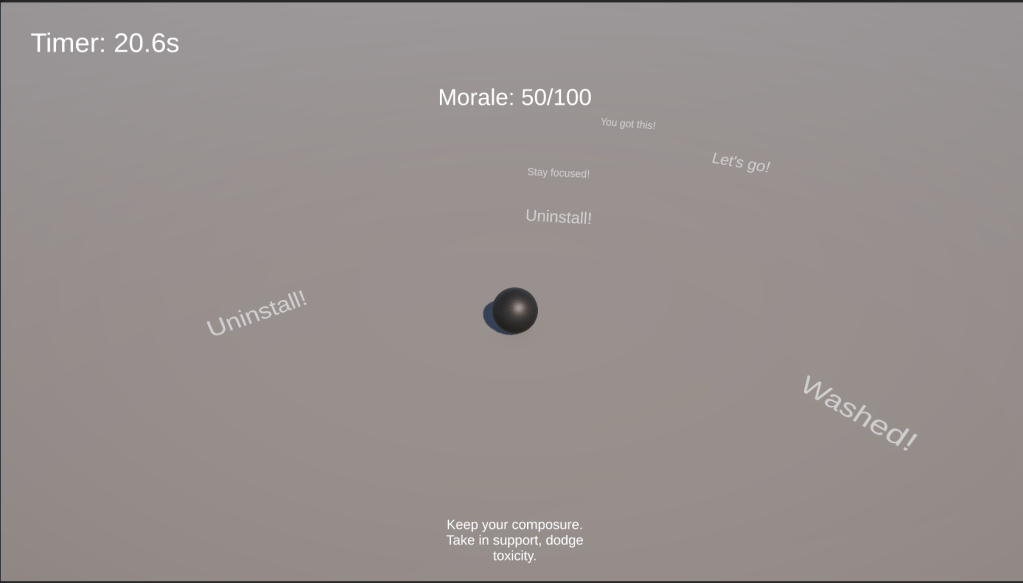
Keep the Composure casts me as a pro on stage while VOICE sweep in from the crowd. Supportive lines I absorb to raise Morale; toxic lines I dodge to avoid knockback and drain. The win condition is mental steadiness: embrace encouragement, evade toxicity, and finish above the threshold before time runs out.
HW2
Philosophical
1. Mapping Last Week’s Experience
Participation (Active vs Passive): 0.8
Even as an audience member, I was not passive. Cheering, reacting to plays, joining crowd rhythms, and responding to the staging all required active engagement.
Connection (Absorption vs Immersion): 0.9
The synchronized lighting, sound design, camera cuts, and crowd energy created a deeply immersive environment. Instead of merely absorbing content, I felt enveloped in it.
Experience Economy Realm: Escapist (with elements of Entertainment)
The experience allows spectators to step into a world with its own emotional rules—pacing, tension, collective suspense—aligning strongly with the Escapist realm in Pine & Gilmore’s model.
2. Mapping a Few Additional Experiences
| Experience | Participation | Connection | Experience Economy Realm |
|---|---|---|---|
| Live eSports Event | 0.8 | 0.9 | Escapist + Entertainment |
| Theme-Park Roller Coaster | 0.9 | 0.8 | Escapist |
| Watching Twitch at home | 0.3 | 0.3 | Entertainment |
Numbers are not scientific measurements—they simply help visualize the position of each experience.
Practical
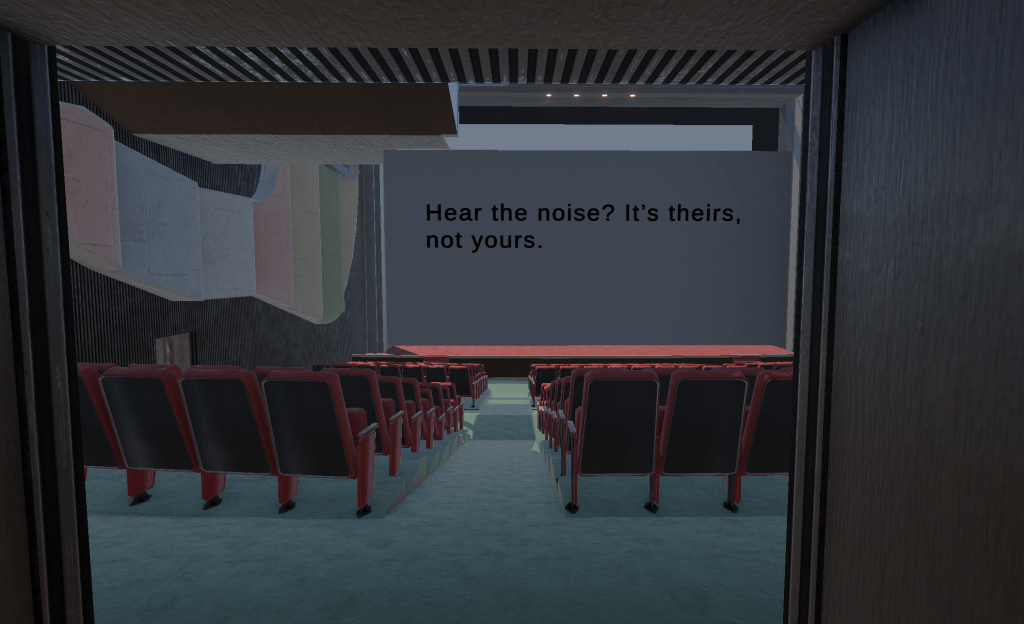
Instead of a natural terrain, I downloaded a theater-style eSports arena from the Asset Store as the player’s journey space.
The audience seats, lights, and stage create a curated environment that reflects emotional highs and lows during a match.
As the player walks from backstage to the center stage, cards appear along the path (“Breathe”, “Focus”, “Tune out the noise”), guiding both physical movement and mental state.
This spatial design functions like a terrain, it shapes the player’s rhythm, pace, and attention, and in a way that matches the eSports theme more authentically.
HW3
Philosophical
Philosophical
My daily commute often feels like a game level. I start with “Energy = 100,” spend coins on coffee ( − Gold, + Focus ), and face environmental hazards like crowds and train delays. The player’s motivation is both extrinsic ( arrive on time ) and intrinsic ( observe people and collect inspiration ). Using McLuhan’s idea of medium as message, my phone acts as the primary UI that compresses time and space, it turns the city into an interactive interface of notifications and maps.
On Pine & Gilmore’s Experience Economy scale, my commute sits between Educational ( learning navigation and timing ) and Escapist ( immersed in music and movement ).
Experience Participation Connection Realm Morning commute 0.7 0.6 Educational + Escapist Café break 0.4 0.7 Esthetic Gaming at home 0.9 0.9 Escapist Lecture class 0.5 0.4 Educational
Practical
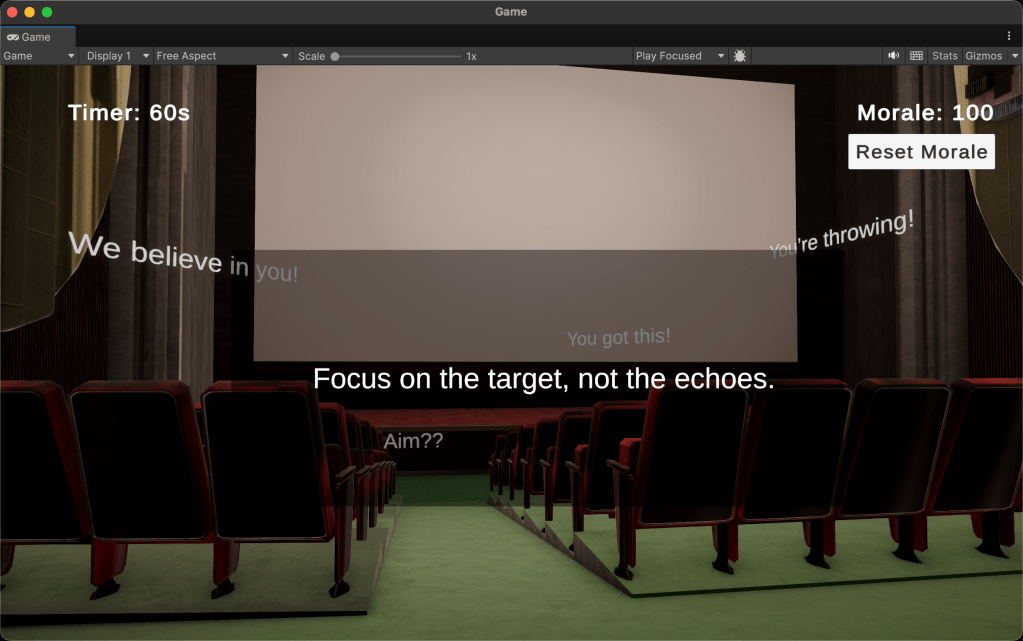
For this week’s practical assignment, I built a small first-person journey, set inside a theater-style eSports arena. The player begins backstage and walks toward the brightly lit stage, passing through a series of trigger zones. Each trigger activates a TMP card—short guidance messages such as “Breathe,” “Hear the noise? It’s theirs, not yours,” and “Focus on the target, not the echoes.” These cards act as moments of internal narration, shaping the player’s emotional path.
As the player steps onto the stage, floating TMP “voice orbs” appear around them, representing supportive or toxic audience comments. They raise or lower the Morale counter, which functions as the game’s progress variable. The UI also displays a timer and a small “Reset” button.
HW5
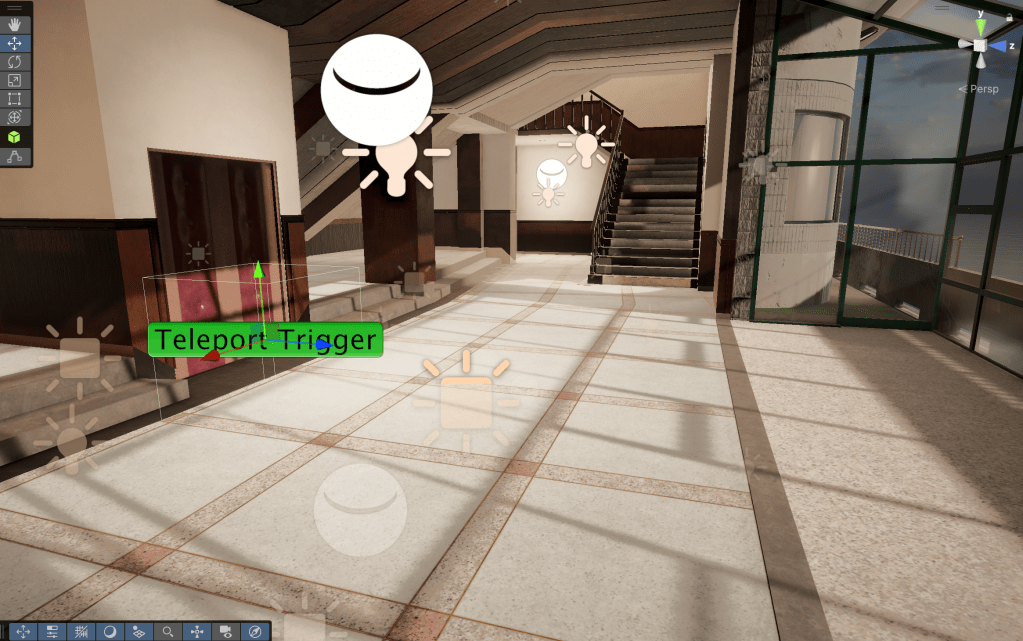
The first screenshot shows the Teleport Trigger placed inside the theater environment. When the player enters this collider, the SendAnyObjectAnywhere script automatically moves the Player+Camera rig to a new location.
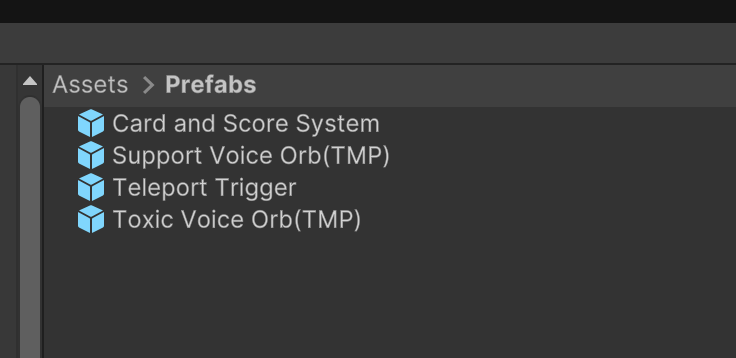
The second screenshot displays my Prefabs folder, which contains reusable objects:
- a Teleport Trigger,
- Support and Toxic TMP “voice orbs,”
- and the combined Card + Scoring System object.
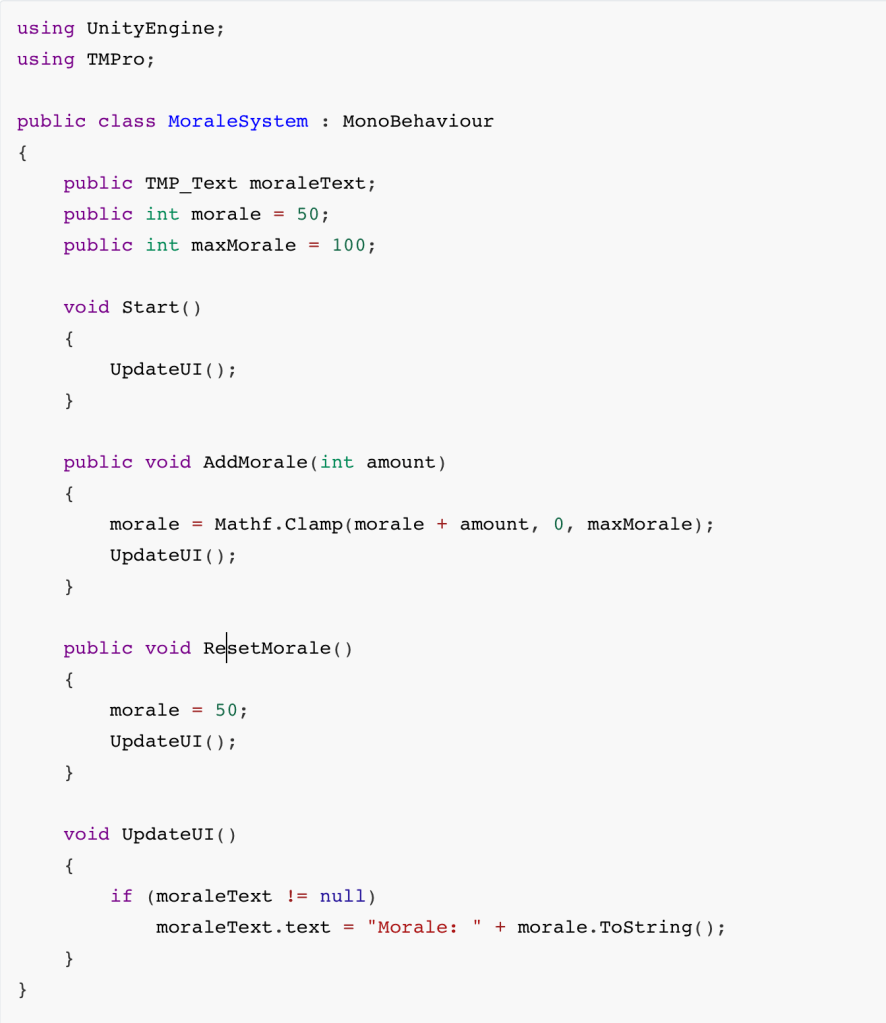
The third screenshot shows the Morale System, which functions as the game’s scoring system. Supportive orbs increase morale, while toxic ones decrease it. The value is updated in the UI and serves as the numerical variable that defines the player’s progress during the experience.
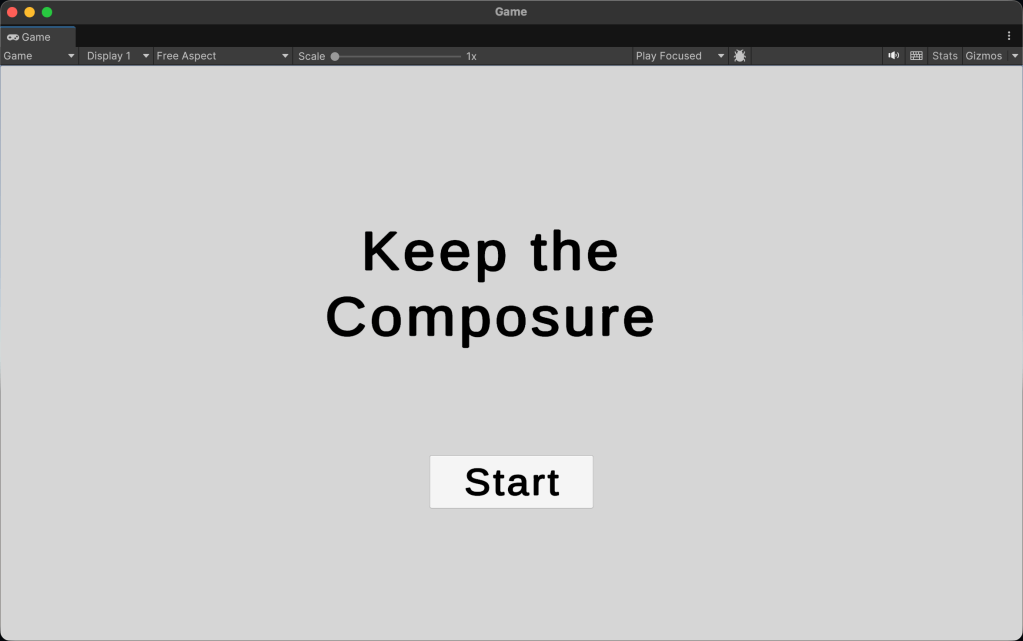
The final screenshot shows the Opening Screen, where a UI Button (“Start”) loads the main scene.
HW7
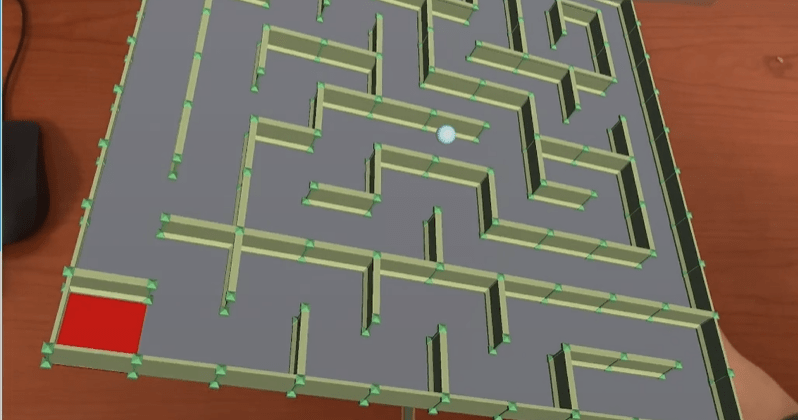
For this week’s assignment, I revisited an AR project I previously created using Vuforia. The game places a small rolling ball inside a virtual maze that is anchored to a physical Image Target. Instead of using buttons or joystick controls, the player manipulates the maze by tilting the physical card in the real world.
World Input
The AR camera continuously tracks the rotation of the Image Target.
Every small tilt—forward, backward, or sideways, is interpreted as a change in the maze’s orientation.
- Tilt left → maze rotates left
- Tilt forward → maze slopes downward
- Tilt right → maze tilts toward the right
- Shake slightly → small disturbances in the ball’s motion
In other words, the “controller” is not virtual at all: it is a piece of paper held in the player’s hand.
Game Output
The digital maze responds immediately:
- The ball rolls according to gravity
- The walls cast shadows and move with the tilt
- The difficulty changes dynamically depending on how unstable the player’s hand is
- Completing the maze triggers a visual celebration (e.g., particle effect or color change)
Even though the world influences the game, the game also “writes back” by changing the player’s physical strategy:
- If the ball rolls too fast → player reduces tilt
- If the ball gets stuck → player gently vibrates the card
- If the maze is nearly solved → the player holds their hand very still
The digital feedback loops into the physical body.
Feedback Loop
Player’s hand movement → Vuforia tracking → Maze tilt → Ball moves → Player adjusts hand
HW8/9
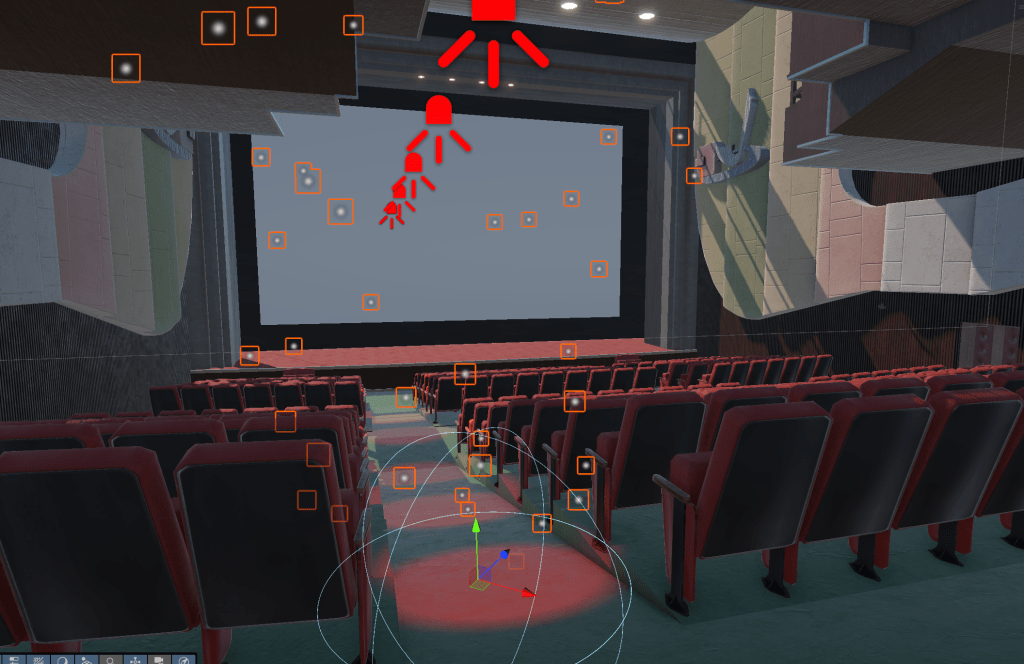
I added multiple red spotlights along the player’s path and above the stage area. These lights create a sense of pressure and visibility. And their placement guides attention forward and emphasizes the theatrical nature of the environment.
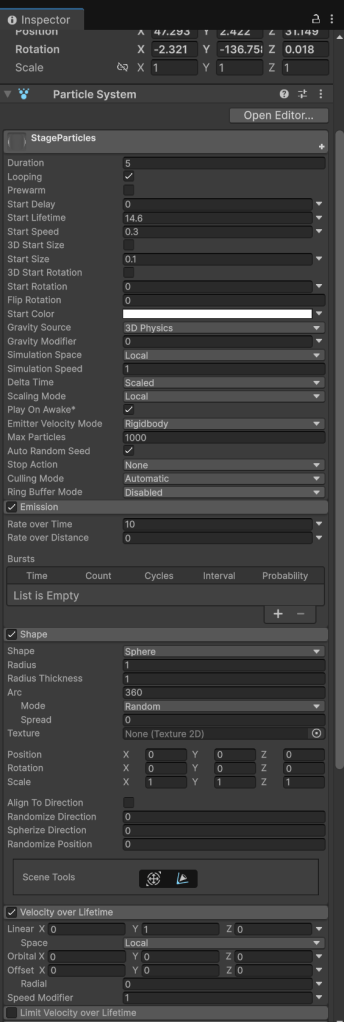
I also created a particle system that represents invisible noise and tension in the air. The system is set to loop continuously and remains subtle, contributing to the mood without distracting the player. This particle system was then converted into a prefab, allowing me to reuse and adjust it across the scene.
Final Project Proposal — Three Directions
Idea 1: Driving
This project is a simple third-person driving game. Before you start, you pick a car and a scene (like a city, highway, or open area). I’m not trying to make a competitive racing game—it’s more about just driving around and seeing how the car and the environment feel different while you move through the space.
Idea 2: Walking Through States
This project is a walking experience in either first-person or third-person view. Before entering the scene, the player chooses a simple state, such as calm, rushed, or tired. The environment then changes based on that choice. For example, walking speed, camera movement, lighting, and background sound might feel different.
Idea 3: Small Choices, Different Paths
This project is a short exploration game where the player makes a few small choices at the beginning, like going left or right, walking toward a bright area or a dark one, or staying outside versus going indoors. These choices slowly affect the environment, such as the lighting, sounds, and where the player ends up. The game is not about making the “right” choice, but about noticing how small decisions change the experience.
HW10
What I did
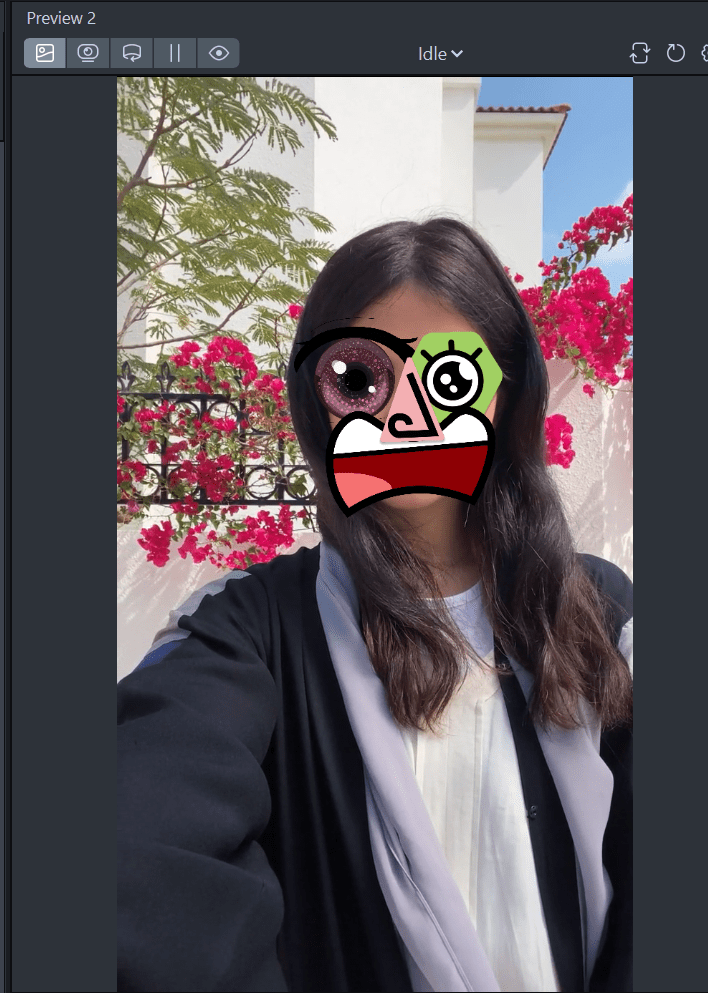
For this homework, I explored Lens Studio using the Paper Head template from the Asset Library. I imported the Paper Head example and experimented with changing the eyes and mouth. I replaced the original textures and adjusted their size and position.
What worked
Using the template made it easy to see how face tracking is set up.
Changing textures was straightforward, and the face reacted correctly to my expressions.
What didn’t work / challenges
It took some time to fine-tune the position and scale of the eyes and mouth, so they looked natural. Small adjustments made a big difference, so I had to test multiple times.
Final Project
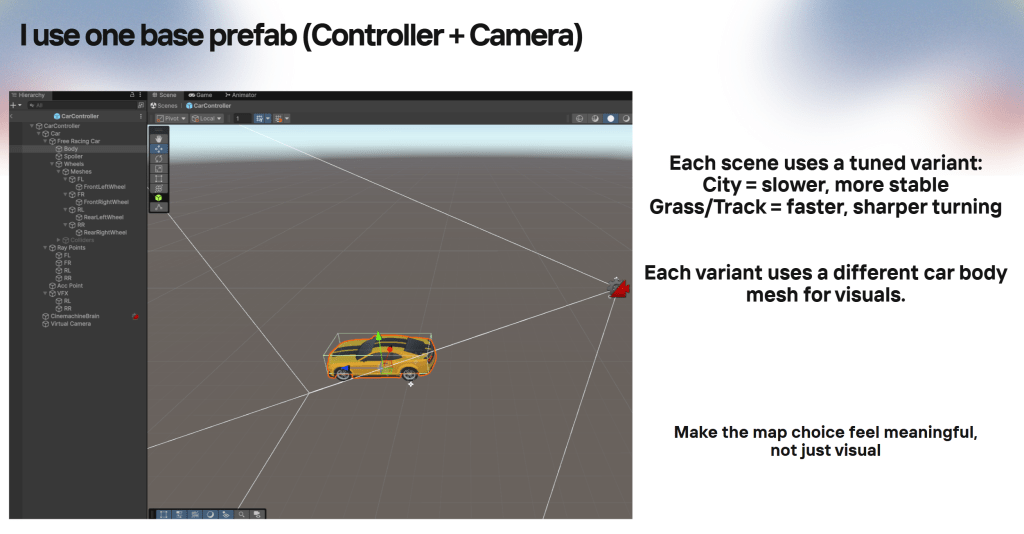
This project is a third-person driving game made in Unity.
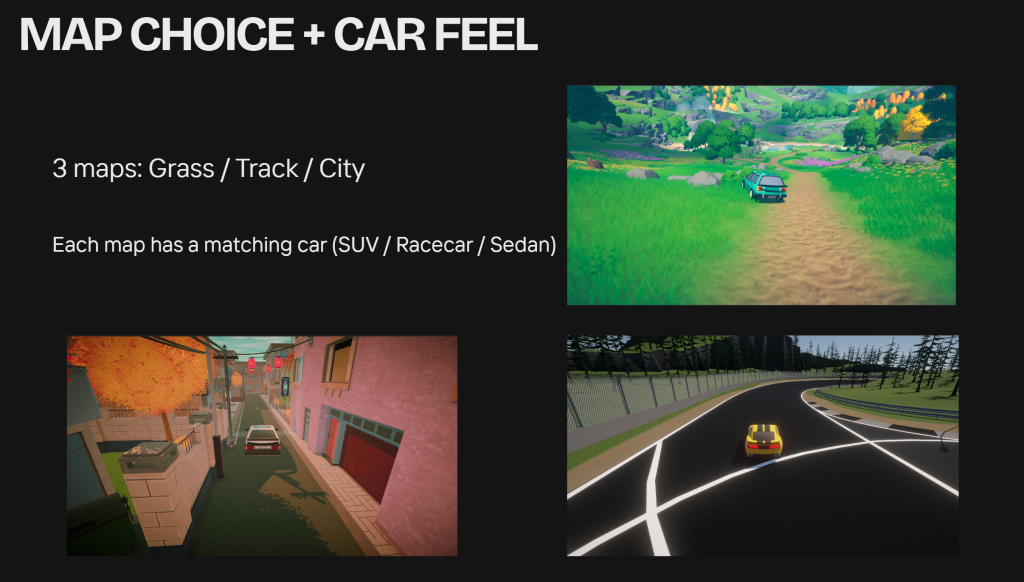
Players can choose between three maps: grass, track, and city, and each map has a different car type.
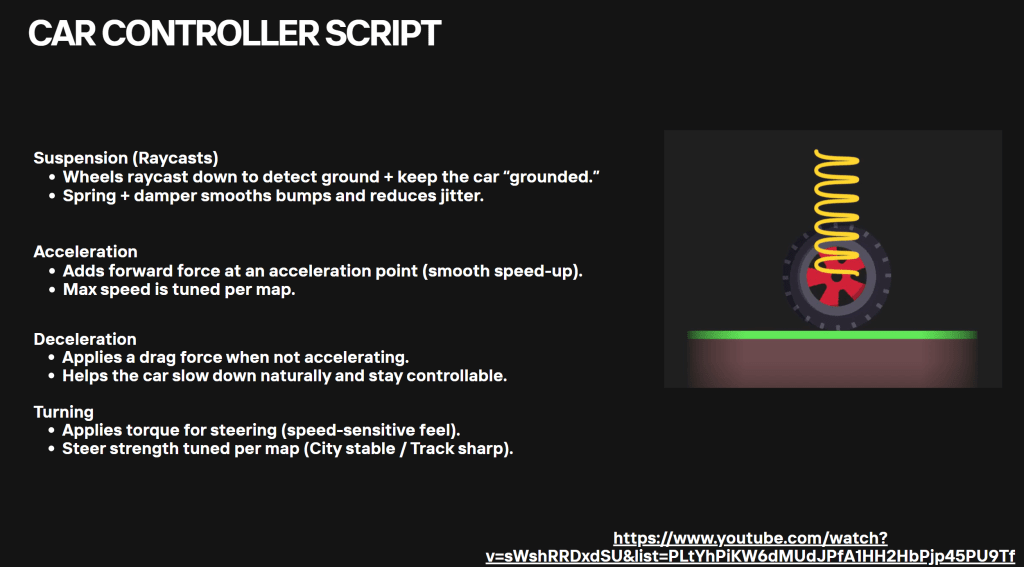
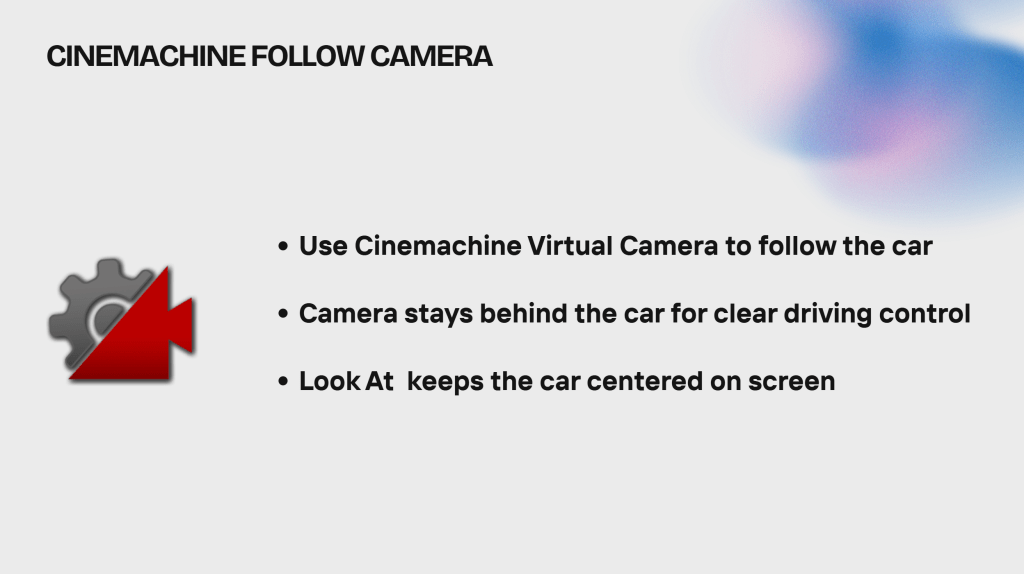
The driving behavior and camera settings are adjusted per map to create different driving feels.
The focus of the project is on movement, camera, and player experience rather than competition.
 Ritchey Zhang